Why Anxiety Feels Worse at Night (and What You Can Do About It)
Have you ever noticed that your mind seems to come alive just as you're trying to fall asleep? Throughout the day you've managed to keep going, but as soon as the lights go out, your thoughts begin racing. You replay conversations, worry about tomorrow, or find yourself imagining every possible worst-case scenario.
If this sounds familiar, you're far from alone.
Many people experience increased anxiety during the evening, and there are understandable reasons why it happens. The good news is that there are practical ways to reduce its impact, and if anxiety is becoming overwhelming, counselling can help you understand and manage it more effectively.
Why Does Anxiety Feel Worse at Night?
1. The Distractions Have Gone
During the day, life keeps us occupied. Work, family responsibilities, social interactions, and daily tasks give our brains plenty to focus on.
When bedtime arrives, those distractions disappear.
For the first time all day, you're left alone with your thoughts. Concerns you've pushed aside suddenly demand your attention, making worries feel much bigger than they did earlier.
2. Your Brain Starts Processing the Day
Our minds naturally process experiences when we're resting.
If you've had a stressful day, unresolved conflict, difficult emotions, or ongoing pressures, your brain may begin trying to make sense of everything.
This can lead to:
- Racing thoughts
- Overthinking
- Catastrophising
- Constant "what if?" questions
- Difficulty switching off
Although your brain is trying to protect you by preparing for possible problems, it often leaves you feeling exhausted instead.
3. Your Body Is More Aware of Physical Sensations
When everything becomes quieter, you're more likely to notice your body's sensations.
You may suddenly become aware of:
- A faster heartbeat
- Tightness in your chest
- Muscle tension
- Changes in your breathing
- An unsettled stomach
These are common symptoms of anxiety, but noticing them can sometimes create even more worry, leading to a cycle where anxiety feeds itself.
4. Sleep Worries Create More Anxiety
Many people begin worrying about not sleeping.
Thoughts such as:
- "If I don't sleep now, tomorrow will be ruined."
- "I need eight hours."
- "Why can't I switch off?"
can actually increase anxiety, making it even harder to fall asleep.
The pressure to sleep often becomes one of the biggest obstacles to getting any rest.
Signs That Night-Time Anxiety May Be Affecting You
You may recognise some of these experiences:
- Your thoughts race as soon as you get into bed.
- You replay conversations repeatedly.
- You imagine worst-case scenarios.
- You struggle to relax even when you're physically tired.
- You wake during the night with anxious thoughts.
- You regularly lose sleep because of worry.
- You dread bedtime because you know your anxiety will increase.
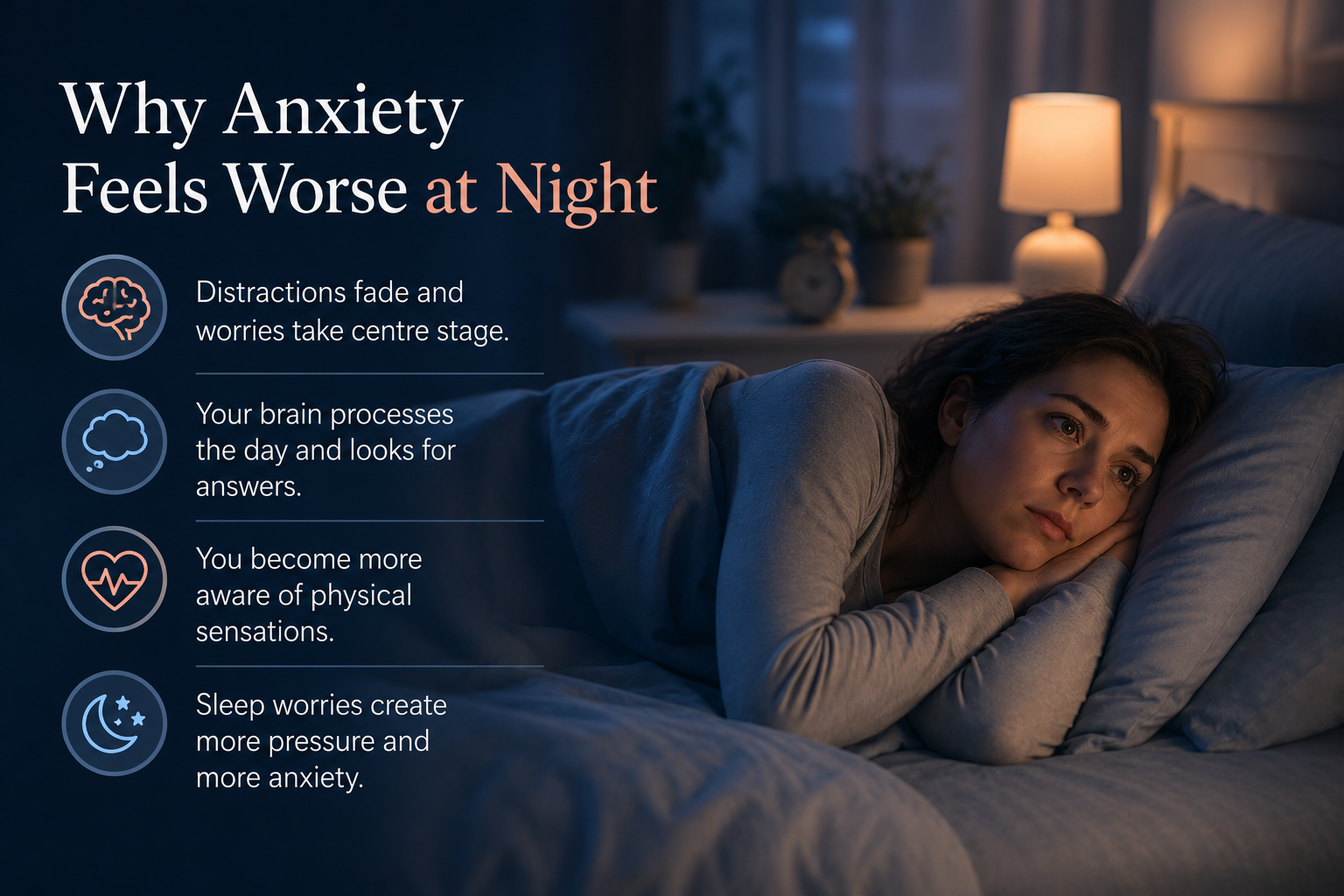
Understanding why anxiety often intensifies at night can be the first step towards managing it more effectively.
What Can You Do About It?
While there's no instant solution, there are several approaches that many people find helpful.
Create a Wind-Down Routine
Your brain benefits from clear signals that the day is ending.
Try spending the last 30–60 minutes before bed doing calming activities such as:
- Reading
- Gentle stretching
- Listening to relaxing music
- Having a warm drink (avoiding excess caffeine)
- Taking a warm bath
- Practising slow breathing
Consistency is often more important than perfection.
Write Your Worries Down
Instead of trying to stop worrying, give your worries somewhere to go.
Spend ten minutes writing:
- What's worrying you?
- Can you do anything about it tonight?
- If not, when will you return to it tomorrow?
Many people find this helps their brain "park" those thoughts until the next day.
Limit Screen Time
Phones and tablets can keep your brain stimulated.
Social media, work emails and constant news updates may increase stress just before bedtime.
If possible, aim to reduce screen use during the hour before sleep.
Practise Slow Breathing
When we're anxious, our breathing often becomes quicker and shallower.
Try slowing it down by breathing in gently through your nose for four seconds, then breathing out slowly for six seconds.
This can help activate your body's natural relaxation response.
Be Kind to Yourself
Many people become frustrated with themselves when they can't sleep.
Instead of thinking:
"I shouldn't feel like this."
Try reminding yourself:
"I'm anxious right now, and that's okay. This feeling will pass."
Self-compassion often reduces anxiety more effectively than self-criticism.
When Should You Seek Support?
Everyone experiences anxiety occasionally.
However, if your anxiety is:
- affecting your sleep regularly
- impacting your work or relationships
- leaving you feeling overwhelmed
- becoming increasingly difficult to manage on your own
it may be helpful to speak with a qualified counsellor.
Counselling isn't about telling you to "stop worrying." It's about understanding what's driving your anxiety, recognising unhelpful patterns, developing healthier coping strategies, and helping you regain a sense of calm and control.
How Counselling Can Help
At Inner Journey Counselling, we provide a safe, confidential space where you can explore your thoughts and feelings without judgement.
Together, we can work to understand the underlying causes of your anxiety, build practical coping strategies, and help you feel more confident managing life's challenges.
You don't have to face anxiety alone.
Take the First Step
If anxiety is affecting your evenings, your sleep, or your quality of life, support is available.
Contact Inner Journey Counselling today to arrange an initial appointment and begin your journey towards feeling calmer, sleeping better, and taking back control of your wellbeing.