Understanding Different Types of Therapy: Which Is Right for You?
In today’s fast-paced and often overwhelming world, more people are recognising the importance of looking after their mental health. Therapy has become an increasingly popular and effective way to gain support, build resilience, and improve overall wellbeing.
However, therapy is not one-size-fits-all. With so many different approaches available, it can feel confusing to know where to start or which type of therapy might suit you best.
This guide will help you understand some of the most common types of therapy, so you can feel more confident in choosing the right path for your needs.
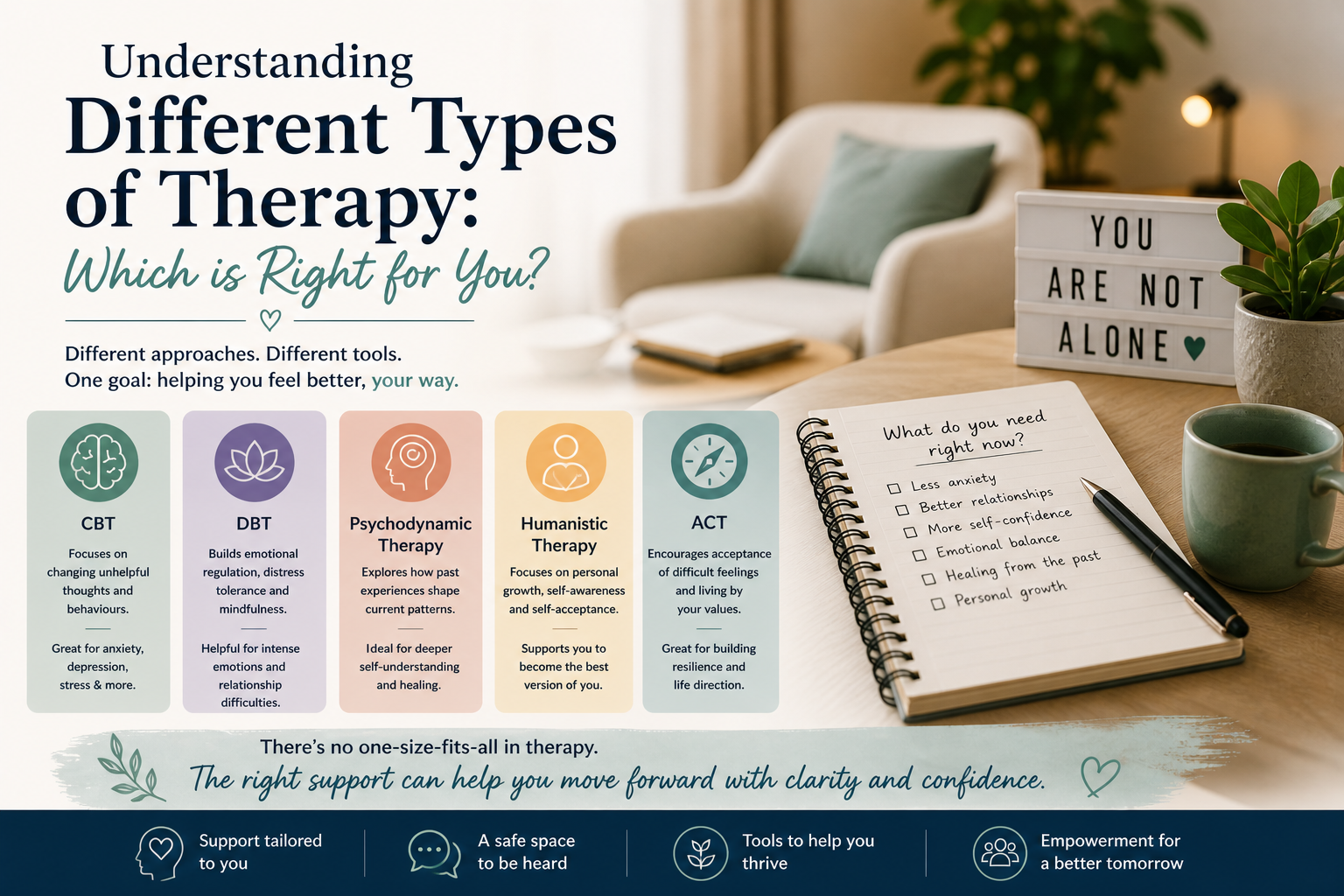
What Is Therapy?
Therapy—also known as counselling or psychotherapy—is a space where you can talk openly with a trained professional about your thoughts, feelings, and experiences.It can help you:
- Understand yourself more deeply
- Manage difficult emotions
- Develop healthier coping strategies
- Navigate life challenges and transitions
While therapy is often associated with conditions like anxiety or depression, it can also support personal growth, relationships, stress management, and self-confidence.
1. Cognitive Behavioural Therapy (CBT)
What is CBT?
CBT is one of the most widely used and evidence-based therapies. It focuses on the connection between your thoughts, feelings, and behaviours.How it works
CBT helps you identify negative or unhelpful thinking patterns and learn how to challenge and change them. It also teaches practical skills such as problem-solving, stress management, and coping strategies.Best suited for:
- Anxiety and panic disorders
- Depression
- OCD and phobias
- PTSD
- Stress and overwhelm
Ideal if you prefer a structured, practical, and goal-focused approach.
2. Dialectical Behaviour Therapy (DBT)
What is DBT?
DBT is a type of therapy that combines CBT techniques with mindfulness and emotional regulation skills.How it works
It focuses on balancing acceptance and change, helping you manage intense emotions and build healthier relationships.Key skills include:
- Mindfulness
- Distress tolerance
- Emotional regulation
- Interpersonal effectiveness
Best suited for:
- Intense emotions
- Relationship difficulties
- Self-harming behaviours
- Trauma and PTSD
- Personality disorders
Helpful if you feel overwhelmed by emotions or struggle with emotional control.
3. Psychodynamic Therapy
What is it?
Psychodynamic therapy explores how past experiences—especially from childhood—shape your current thoughts, feelings, and behaviours.How it works
Through open conversation and reflection, you gain insight into unconscious patterns and emotional triggers, helping you understand yourself on a deeper level.Best suited for:
- Long-standing emotional difficulties
- Relationship patterns
- Low self-esteem
- Trauma
Ideal if you want deeper self-exploration and insight into your past.
4. Humanistic (Person-Centred) Therapy
What is it?
This approach focuses on personal growth, self-awareness, and your potential as an individual.How it works
The therapist creates a safe, non-judgemental space where you feel heard and accepted. This allows you to explore your feelings at your own pace and develop a stronger sense of self.Best suited for:
- Personal growth
- Low self-esteem
- Life transitions
- Building confidence
Great if you want a supportive, empathetic, and less structured approach.
5. Acceptance and Commitment Therapy (ACT)
What is ACT?
ACT helps you accept difficult thoughts and feelings rather than fighting them, while focusing on living in line with your values.How it works
It combines mindfulness with behavioural change strategies, encouraging you to move forward even when things feel difficult.Key elements include:
- Acceptance
- Mindfulness
- Values-based action
Best suited for:
- Anxiety and stress
- Depression
- Chronic pain
- Avoidance patterns
Ideal if you feel stuck or are trying to avoid difficult emotions.
How to Choose the Right Therapy for You
Choosing the right therapy is a personal decision, and there’s no “perfect” answer. It often depends on:
- Your goals (e.g. symptom relief vs self-exploration)
- Your personality and preferences
- The challenges you’re facing
Some people prefer structured approaches like CBT, while others benefit more from open, exploratory therapies like psychodynamic or person-centred therapy.It’s also common for therapists to integrate different approaches to suit your individual needs.
Final Thoughts
Starting therapy can feel like a big step—but it’s also a powerful one.The most important factor isn’t just the type of therapy, but finding a therapist you feel comfortable with and supported by. A strong therapeutic relationship can make all the difference.If you’re unsure where to begin, many therapists offer an initial consultation. This gives you the opportunity to ask questions, explore different approaches, and find what feels right for you.Remember, therapy isn’t about “fixing” you—it’s about understanding yourself, growing, and creating a life that feels more balanced and fulfilling.