How to Find the Right Therapist: A Complete Guide
Finding the right therapist can feel overwhelming—especially when you’re already dealing with stress, anxiety, or emotional challenges. In the UK alone, millions of people experience mental health difficulties each year, yet knowing where to start with therapy isn’t always straightforward.
The good news is that finding the right therapist doesn’t have to be complicated. With the right guidance, you can choose someone who truly understands your needs and supports your journey toward better mental health.
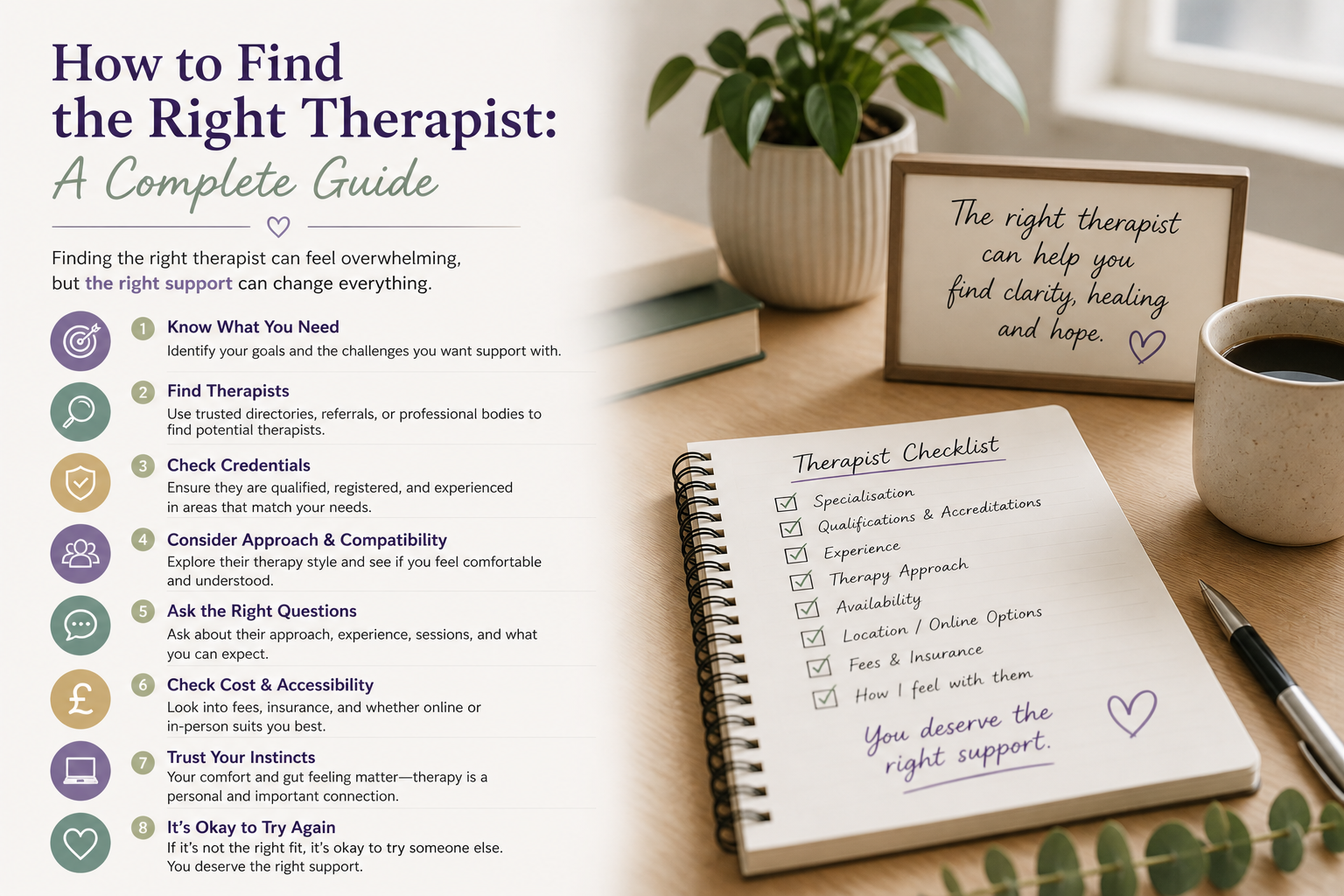
Why Finding the Right Therapist Matters
Therapy is a deeply personal experience. The relationship you build with your therapist plays a huge role in how effective the process will be. Feeling safe, understood, and supported can make all the difference in your progress.
Step 1: Understand What You Need
Before searching for a therapist, take some time to reflect on what you’re looking for.
Identify Your Goals
Ask yourself:
- Do I want to reduce anxiety or stress?
- Am I struggling with relationships?
- Do I want to improve confidence or self-esteem?
- Am I dealing with trauma, grief, or burnout?
Having clear goals helps guide your therapy and makes it easier to find the right fit.
Recognise Your Challenges
You might be experiencing:
- Anxiety or overthinking
- Low mood or depression
- Work-related stress or burnout
- Relationship difficulties
- Sleep or concentration issues
Understanding your main concerns will help you choose a therapist with the right expertise.
Step 2: Where to Find a Therapist
Use Trusted Online Directories
Websites like:
- BACP (British Association for Counselling and Psychotherapy)
- Counselling Directory
- Psychology Today
allow you to filter therapists by location, specialism, and approach.
Ask for Recommendations
You can also:
- Speak to your GP
- Ask trusted friends or family
- Seek referrals from other professionals
If this feels uncomfortable, online searches are a perfectly valid starting point.
Step 3: Check Qualifications and Experience
In the UK, it’s important to choose a therapist who is:
- Registered with a professional body (e.g. BACP, UKCP, HCPC)
- Properly trained and qualified
- Experienced in your area of concern
Don’t hesitate to ask about their background—it’s your right to feel confident in your choice.
Step 4: Consider Therapy Approaches
Different therapists use different methods. Some common approaches include:
- CBT (Cognitive Behavioural Therapy): Focuses on changing thought patterns
- Person-Centred Therapy: Emphasises empathy and self-exploration
- Psychodynamic Therapy: Explores past experiences and unconscious patterns
- Integrative Therapy: Combines different approaches tailored to you
A good therapist will explain their approach clearly and help you decide if it feels right.
Step 5: Check Personal Compatibility
Connection matters. Ask yourself after your first interaction:
- Do I feel comfortable talking to this person?
- Do they listen and understand me?
- Do I feel safe and not judged?
Trust your instincts—feeling at ease is essential for effective therapy.
Step 6: Questions to Ask Before Starting
It can help to ask:
- What experience do you have with my concerns?
- What approach do you use?
- What can I expect from sessions?
- How long might therapy take?
- How do you measure progress?
These questions help you feel more informed and confident.
Step 7: Consider Cost and Accessibility
Therapy is an investment in your wellbeing, but there are options to suit different budgets.
Things to explore:
- Private therapy fees
- Sliding scale or reduced-cost sessions
- NHS or community services
- Online therapy platforms
Always ask about pricing upfront to avoid surprises.
Step 8: Online vs In-Person Therapy
Both options can be effective—it depends on your preference.
Online Therapy
✔ Flexible and convenient
✔ Accessible from anywhere
✔ Often more affordable
In-Person Therapy
✔ Stronger face-to-face connection
✔ Ideal for deeper or complex work
✔ Fewer distractionsSome people benefit from a combination of both.
Step 9: Trust Your Instincts
Your intuition is one of your best guides.If something doesn’t feel right, it’s okay to:
- Try another therapist
- Ask questions
- Take your time deciding
Finding the right therapist may take a few attempts—and that’s completely normal.
What If It’s Not the Right Fit?
Not every therapist will be the right match—and that’s okay.If you feel uncomfortable or unsupported:
- Share your concerns if you feel able
- Give it a few sessions to settle
- Move on if it doesn’t improve
Your comfort and trust are essential for progress.
Final Thoughts
Finding the right therapist is a personal journey—but one that’s worth taking. The right support can help you better understand yourself, navigate challenges, and move forward with greater clarity and confidence.You don’t have to face things alone.Taking that first step—however small—is a powerful act of self-care.