Grounded and Calm: Effective Grounding Techniques for Anxiety and Stress
In today’s fast-paced, always-connected world, stress and anxiety have become increasingly common. Whether it’s work pressures, emotional overwhelm, or unexpected life events, these experiences can leave us feeling mentally scattered, physically tense, and emotionally drained.
When anxiety takes hold, it can pull us away from the present moment. You might find yourself caught in racing thoughts, feeling disconnected from your body, or overwhelmed by physical sensations. This is where grounding techniques can help.
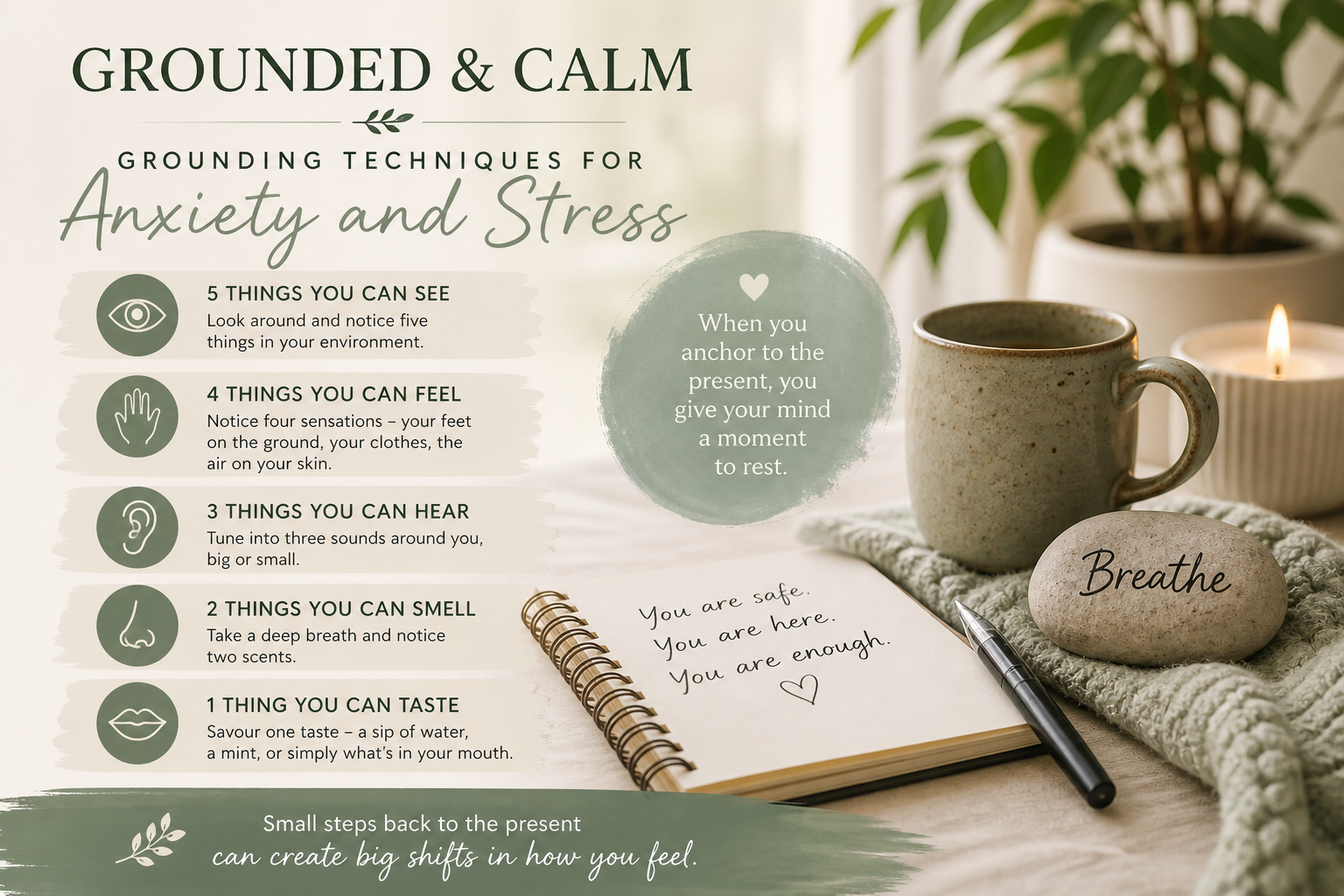
Grounding is a simple yet powerful way to reconnect with your body and surroundings. By bringing your attention back to the present, grounding techniques can calm your nervous system, interrupt anxious thinking, and help you feel more centred and in control.
Below are some practical and effective grounding exercises you can use whenever anxiety or stress arises.
Why Grounding Works
When we feel anxious, the body activates the fight-or-flight response — a natural survival mechanism designed to protect us from danger. However, in everyday life, this response can be triggered too often, even when no real threat is present.
Grounding techniques help regulate this response by:
- Activating the body’s calming rest and digest system
- Shifting focus away from anxious thoughts
- Reinforcing a sense of safety in the present moment
- Restoring a feeling of control
The best part is that grounding techniques are simple, accessible, and can be used almost anywhere.
1. The 5-4-3-2-1 Grounding Technique
This is one of the most effective sensory grounding exercises. It helps bring your awareness back to the present by engaging your five senses.
Try this:
- 5 things you can see – Look around and name five objects
- 4 things you can feel – Notice physical sensations (clothing, your feet on the floor)
- 3 things you can hear – Identify nearby sounds
- 2 things you can smell – Focus on scents around you
- 1 thing you can taste – Notice a taste or take a sip of water
This technique gently shifts your attention away from internal overwhelm and back to your environment.
2. Deep Breathing (Box Breathing)
Breathing is one of the quickest ways to calm anxiety. When we feel stressed, our breathing becomes shallow and rapid. Slowing it down helps signal safety to the brain.
Try box breathing:
- Inhale for 4 seconds
- Hold for 4 seconds
- Exhale for 4 seconds
- Hold for 4 seconds
Repeat for a few minutes, allowing your body to gradually settle.
3. Physical Grounding: Movement and Touch
Bringing awareness into the body can quickly reduce anxiety.
Try:
- Holding a small object and focusing on its texture
- Stretching your body and noticing each movement
- Taking a slow, mindful walk
- Gently shaking out tension in your arms or hands
Physical grounding helps release built-up stress and reconnects you with the present moment.
4. Name and Validate Your Feelings
Acknowledging what you’re feeling can reduce its intensity. This is known as affect labelling.
Try saying:
- “I’m feeling overwhelmed right now.”
- “I notice anxiety in my body.”
- “This feels difficult, and that’s okay.”
Naming your emotions helps create distance from them and encourages self-compassion.
5. Use Affirmations or Mantras
Simple, calming statements can help shift your mindset and reduce anxious thinking.
Try:
- “I am safe in this moment.”
- “I can handle this.”
- “My body knows how to calm down.”
- “I am grounded and present.”
Repeat these quietly while focusing on your breath.
6. Temperature-Based Grounding
Changing your body temperature can quickly interrupt anxiety.
You might try:
- Splashing cold water on your face
- Holding an ice cube
- Drinking cold water slowly
- Stepping outside for fresh air
These techniques can act as a reset for your nervous system.
Finding What Works for You
There is no single “right” technique. Different approaches work for different people.
Ask yourself:
- Do I respond better to physical or mental techniques?
- What feels calming but manageable?
- What can I use quickly in everyday situations?
Building your own toolkit of grounding strategies can make it easier to respond when anxiety arises.
Final Thoughts
Anxiety and stress are natural human experiences, but they don’t have to take over. Grounding techniques offer simple, effective ways to bring yourself back to the present and regain a sense of calm.
With practice, these small moments of awareness can create lasting changes in how you respond to stress.
You are not your anxiety.
You are learning how to support yourself — and that is a powerful step forward.