High-Functioning Depression: The Hidden Struggle Behind the Smile
When we think of depression, we often imagine someone unable to get out of bed or manage daily life. But depression doesn’t always look this way.
Some people continue to work, socialise, and meet expectations — appearing successful and “fine” on the outside — while quietly struggling within. This is often referred to as high-functioning depression, a hidden form of emotional distress that can easily go unnoticed.
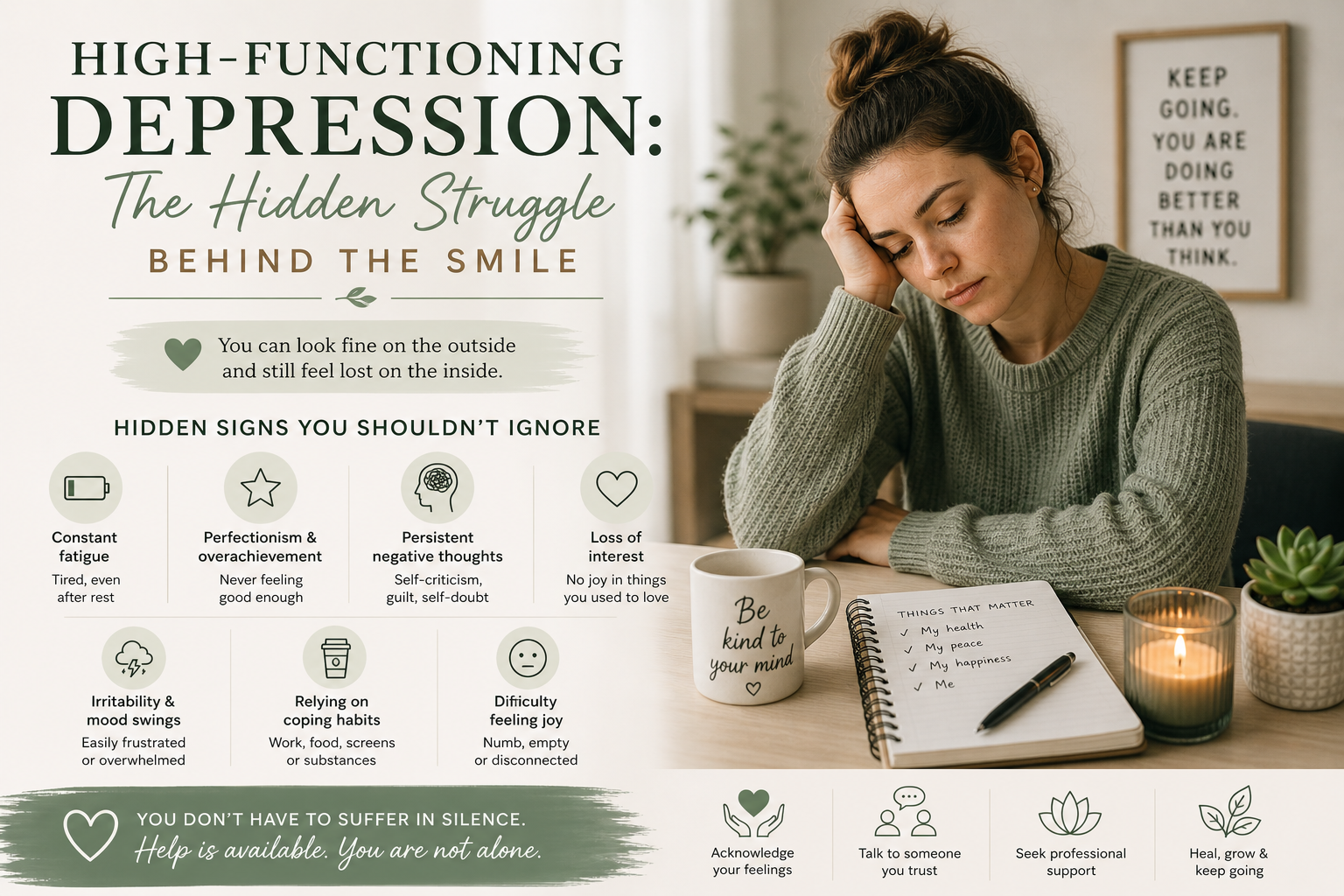
What Is High-Functioning Depression?
High-functioning depression is commonly associated with persistent depressive disorder (PDD) — a long-term form of depression that may be less intense than major depression but lasts for longer.
People experiencing this may:
- Maintain careers and relationships
- Meet responsibilities and expectations
- Appear capable and composed
Yet internally, they may live with ongoing feelings of:
- Low mood
- Emotional exhaustion
- Self-doubt
- Disconnection
Because they continue to “function,” their struggles are often minimised — by others and sometimes even by themselves.
Hidden Signs and Symptoms
High-functioning depression doesn’t always present in obvious ways. Here are some key signs to be aware of:
1. Ongoing Fatigue
A constant sense of tiredness, even after rest. Emotional strain can be just as exhausting as physical effort.
2. Perfectionism and Overachievement
Setting unrealistically high standards and tying self-worth to achievement. Success may mask a deeper sense of inadequacy.
3. Persistent Self-Criticism
Negative internal dialogue, including feelings of guilt, worthlessness, or not being “good enough,” often hidden behind humour or busyness.
4. Loss of Enjoyment
Activities that once brought pleasure may feel flat or meaningless. Participation may continue, but without genuine engagement.
5. Irritability and Emotional Sensitivity
Rather than visible sadness, this can show up as frustration, irritability, or feeling easily overwhelmed.
6. Reliance on Coping Behaviours
Using distractions such as overworking, scrolling, binge-watching, or emotional eating to manage internal discomfort.
7. Difficulty Feeling Joy
Even positive experiences may feel muted. There can be a sense of emotional numbness or disconnection.
Why It Often Goes Unnoticed
High-functioning depression is often overlooked because, on the surface, everything appears to be “fine.”
People experiencing it may:
- Keep up with work and responsibilities
- Maintain social connections
- Appear confident or successful
As a result, others may not recognise their struggle — and they may feel unable to express it. This can lead to feelings of isolation and the belief that they should simply “keep going.”
The Importance of Seeking Support
Living with high-functioning depression can be quietly draining. Without support, it can impact wellbeing over time and may deepen into more severe depression.
Seeking help can make a meaningful difference. This might include:
- Talking therapy or counselling
- Support from a GP or mental health professional
- Small, manageable lifestyle changes
- Opening up to someone you trust
It’s important to remember: just because you’re coping doesn’t mean you’re not struggling.
Final Thoughts
High-functioning depression reminds us that mental health isn’t always visible. Someone can appear strong, capable, and successful — and still be finding things incredibly difficult internally.
If you recognise these signs in yourself or someone else, support is available.
You don’t have to carry it alone.
Reaching out is not a weakness — it’s a step towards understanding, support, and change.