The State of Mental Health in the UK: An Overview
IIn recent years, mental health has become a central focus of public health in the UK. It is estimated that one in four people will experience a mental health problem each year, with conditions such as anxiety, depression, and stress-related disorders continuing to rise.
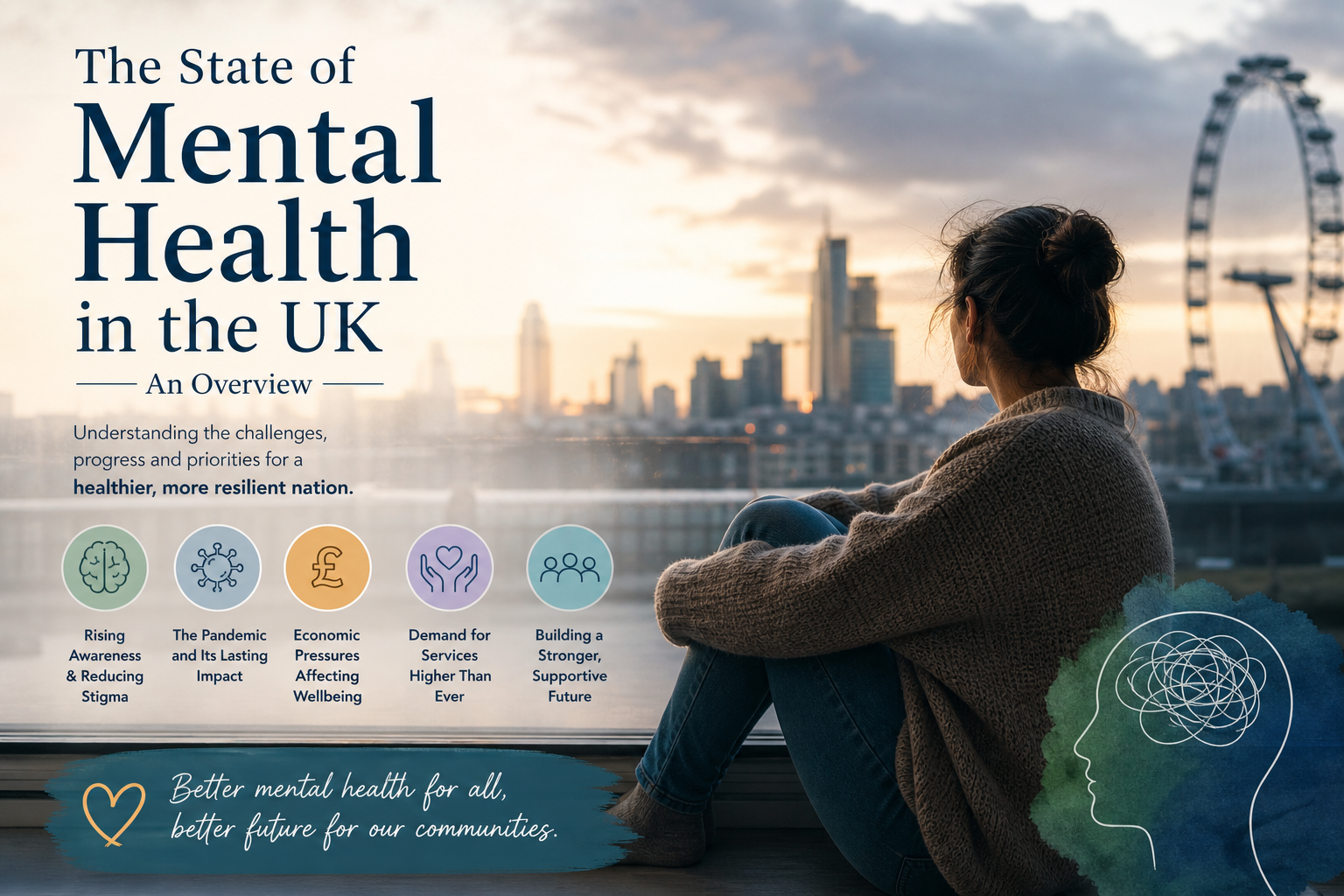
This increase has been influenced by a range of factors, including the lasting impact of the COVID-19 pandemic. By 2024, conversations around mental health are more open than ever before. Greater media attention, public awareness campaigns, and advocacy have helped reduce stigma, making it easier for individuals to seek support.
However, while awareness has improved, demand for mental health services has reached unprecedented levels, highlighting the need for continued investment and accessible care.
The Lasting Impact of the Pandemic
The COVID-19 pandemic left a profound and lasting effect on mental health across the UK. Periods of lockdown, social isolation, financial uncertainty, and fear of illness created significant emotional strain.
Certain groups were particularly affected, including young people, key workers, and those who experienced bereavement. Although society has largely moved forward, many individuals continue to feel the long-term emotional effects, including loneliness, anxiety, and reduced resilience.
The pandemic also led to a sharp increase in people seeking therapy and counselling, placing additional pressure on already stretched services.
Economic Pressures and Mental Wellbeing
The ongoing cost-of-living crisis is another major contributor to declining mental health. Rising living costs, housing pressures, and financial insecurity have created heightened levels of stress and anxiety for many individuals and families.
Financial strain is closely linked to mental health challenges, and those experiencing economic hardship are often at greater risk of developing conditions such as depression and anxiety. Unfortunately, barriers to accessing affordable support mean that many people are left without the help they need.
Mental Health Services in 2024: Challenges and Progress
Despite increased awareness, mental health services in the UK continue to face significant challenges. Long waiting times remain a major concern, with some individuals waiting months—or even years—for access to therapy or specialist support.
To address this, there has been growth in digital mental health services, including online therapy platforms, self-help tools, and virtual support groups. These options have improved accessibility for some, but they cannot fully replace face-to-face support, particularly for individuals with more complex needs.
Additionally, there are ongoing regional disparities in access to care. While urban areas may offer a wider range of services, those in rural or underserved communities often face greater barriers to support.
Youth Mental Health: A Growing Priority
Youth mental health remains one of the most pressing concerns in the UK. Young people today face a unique set of challenges, including academic pressure, social media influence, bullying, and uncertainty about the future.
As a result, rates of anxiety, depression, and self-harm among adolescents have increased significantly.
In response, there have been efforts to expand support, including the introduction of mental health support teams in schools. While this is a positive step, there is growing recognition that early intervention and prevention are key.
Equipping young people with skills such as emotional regulation, resilience, and help-seeking behaviours is essential for long-term wellbeing.
The Role of Workplace Mental Health
Mental health in the workplace has become an increasingly important issue. Employers are beginning to recognise the impact of stress, burnout, and poor work-life balance on both individuals and organisational performance.
Many organisations now offer wellbeing initiatives, including Employee Assistance Programmes (EAPs), counselling support, and flexible working arrangements.
The rise of hybrid working has provided some benefits, allowing employees greater flexibility. However, organisations must continue to prioritise mental health by fostering supportive cultures, reducing stigma, and ensuring employees feel safe to access support when needed.
Looking Ahead: The Future of Mental Health in the UK
As we move beyond 2024, the future of mental health in the UK presents both challenges and opportunities. Encouragingly, there is growing recognition that mental health is just as important as physical health, and this shift is driving meaningful change.
There is increasing focus on integrating mental health into primary care, improving early access to support, and developing more effective treatment approaches.
However, sustained progress will depend on continued investment, improved accessibility, and a commitment to addressing inequalities in care.
Conclusion
Mental health in the UK remains a complex and evolving issue. While awareness and understanding have improved significantly, demand for services continues to exceed capacity.
Factors such as economic pressure, youth mental health challenges, and workplace stress highlight the need for ongoing support and innovation in care.
By continuing to invest in mental health services, education, and early intervention, the UK can move towards a more resilient and supportive society—where everyone has access to the help they need.